Clone Run
- 4.3
- Rating
- 10.00K
- Installs
- Free
- Price

 Analysis by App-foxy
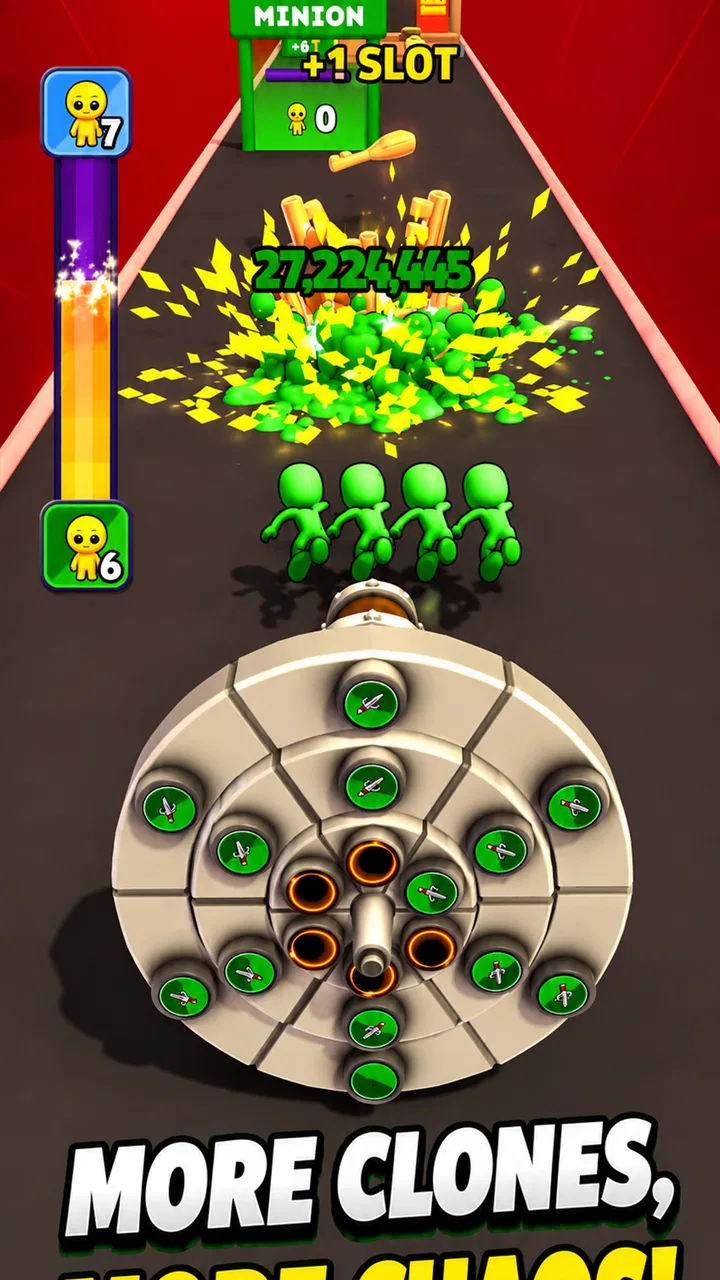
Clone Run is the kind of action game that makes its appeal clear almost immediately: you move through a dangerous run, fire at clones, and try to become stronger before the attempt ends. I found the basic idea easy to understand but surprisingly effective as a short-session game. There is no long explanation to memorize before playing; the attraction comes from making a decision, seeing its result, and wondering whether the next run will go better.
That simple structure matters because this is not trying to replace a deep role-playing game or a large competitive shooter. It sits closer to the quick, repeatable action games I open when I have a few spare minutes. The game is free to download, with optional purchases ranging from $0.99 to $24.99 per item, so the main question is not whether it has a complicated presentation. The real question is whether its run-and-retry rhythm gives you enough reason to begin again.
How the first run communicates the idea
My first impression was that the game’s central action is easy to grasp: keep moving, aim your fire at clones, and look for ways to grow stronger during the run. That clarity is one of its best qualities. I did not need to treat the opening as a tutorial exam. The important relationship is visible from the start: movement keeps danger manageable, firing removes threats, and better choices make the next part of the run feel more possible.
You May Also Like

 AccuWeather: Weather Radar
AccuWeather Review: A Quick, Clear Forecast for Everyday Decisions
For everyday plans, the best forecast is the one you can understand quickly. AccuWeather makes rain timing, radar, and local conditions easy to act on, with a few trade-offs.

 Hill Climb Racing
Why Hill Climb Racing Still Turns Crashes Into One More Run
A tiny car, a bumpy hill and one more upgrade: Hill Climb Racing keeps resurfacing because its simple chaos makes every near-miss feel personal.

 AliExpress - Shopping App
AliExpress Makes Global Shopping Feel Personal, but Shoppers Bear the Risk
AliExpress turns a global marketplace into a pocket-sized discovery engine. Its reach is useful, its shopping loop compelling, and its trade-offs easy to miss.

 Lords Mobile: Kingdom Wars
Lords Mobile Is a Kingdom-Building Routine, Not a Quick Match
A case-by-case verdict on the building, battles, device demands, and social commitments that make Lords Mobile rewarding for some players and exhausting for others.

 PDF Scanner app - TapScanner
TapScanner Makes Paperwork Easier to Capture, Check, and Share
TapScanner makes scanning with a phone feel less like a rescue operation and more like a dependable step in getting work done. Its capture tools are useful, though not flawless.

 Block Blast!
 Shows How Much a Puzzle Game Can Leave Out
A quiet grid game shows why puzzle players increasingly value instant clarity, repeatable skill and low-pressure play—and where the genre still needs to catch up.
More From Our News Desk
View All News


The “ages” concept gives the journey a sense of progression beyond simply surviving one more group of enemies. Even without turning the game into a heavy narrative experience, moving through different stages of development gives the run a direction. I was not only thinking about the next target; I was also thinking about how far the current attempt might carry me and what kind of strength would be available later.
That makes the game approachable for someone who wants action without a large commitment. A person who normally avoids complex character-building systems can understand the immediate goal. At the same time, players who enjoy optimizing short runs may find room to think about timing, positioning, and when a temporary advantage is worth taking a risk for.
The controls and presentation are most useful when they stay out of the way. In a game built around running and firing, hesitation is costly, so the first action needs to feel direct. I would recommend beginning with a few runs focused only on learning the flow rather than trying to play perfectly. Notice how quickly threats close in, how much room you need to turn or reposition, and which moments make you feel safe enough to pursue a stronger outcome.
Why the clone theme works for quick action
Clones are a practical enemy concept for this format because they make the threat immediately readable. The danger is not hidden behind a complicated story or a long list of enemy names. You see what is coming, react, and judge whether your current strength is enough. That supports the game’s compact design: the attention stays on the next decision instead of being divided between several systems.
I also like that the theme supports repetition. If every attempt were built around a different story scene, restarting might feel like replaying the same introduction. Here, the repeated conflict is part of the point. Each run is another chance to handle familiar pressure more intelligently, reach a little farther, or recover from a mistake that ended the previous attempt.
The feedback rhythm: action, danger, and visible progress
The strongest part of Clone Run is its feedback rhythm. I perform an action, the game responds quickly, and that response tells me whether I should continue the same way or change direction. Firing at clones gives immediate purpose to movement. Moving without dealing with threats feels unsafe, while firing without considering position can leave me exposed. The two actions work best together, which gives the basic loop more texture than simply holding one control until the screen clears.
This rhythm is also what makes short sessions feel active. There is little value in a run where nothing changes for too long. The game’s appeal comes from the steady sequence of pressure and response: a threat appears, I react, the path opens briefly, and then another decision arrives. When the timing feels right, even a short attempt has a beginning, a tense middle, and a clear reason it ended.
One useful habit is to stop treating every clone as an emergency that must be attacked immediately. I found that the better question is often whether firing now improves my position or merely distracts me from the next danger. If an enemy can be handled while I keep moving toward a safer route, that is usually more valuable than standing in place to finish one target. This is a small distinction, but it changes the game from frantic tapping into controlled movement.
Another practical tip is to use the early part of a run as information gathering. Rather than spending the opening seconds chasing the strongest possible result, pay attention to how much space you need around your character and how quickly the screen becomes crowded. That knowledge helps later because the most important choice is often made before the situation looks desperate. Once the pressure is high, there may be fewer safe options.
Where the action can feel demanding
The same directness that makes the game accessible can also limit its appeal for players seeking a highly technical action experience. The core actions are easy to understand, and the satisfaction comes from repeating them under increasing pressure. If you want elaborate combos, a large arsenal, or a combat system built around many specialized abilities, this may feel too focused.
I would also avoid judging a run only by its ending. A failed attempt can still teach you something useful about spacing, timing, and the cost of chasing growth. That mindset is important because the game’s structure naturally includes setbacks. If you need every session to produce permanent progress or a clear reward, the reset can feel harsher than it does to someone who enjoys learning through repetition.
For an everyday example, imagine opening the game while waiting for a bus or taking a short break between tasks. You can begin a run without preparing a build or remembering a long objective list. The first minute gives you a quick test of focus, and a failed attempt does not require a large time investment to try again. That makes it more suitable for interrupted play than a story-heavy action game that expects you to remember a detailed mission.
Growth through the ages and the meaning of reward
Growth is what gives the action a destination. Running and firing are satisfying in the moment, but the promise of becoming stronger gives me a reason to take another risk. The game’s age-based progression frames improvement as a journey, so the run feels like more than clearing one threat after another. I am trying to reach a stronger state, not merely survive the next few seconds.
The reward is therefore both practical and motivational. A stronger character can make later pressure more manageable, but the more important effect is psychological: progress turns a difficult section into a challenge I want to revisit. I begin asking whether a different route, a better reaction, or a more patient approach could carry me farther next time.
My advice is to think of growth as a tool for changing the shape of the next attempt, not as a guarantee of success. Becoming stronger helps, but it does not remove the need to move well and respond to threats. If you spend all your attention on improvement while ignoring positioning, the run can still collapse. The best results come from combining the reward with better play.
This is also where players should consider the optional purchase model carefully. The game is free, which makes it easy to try without committing money first. Optional items priced from $0.99 to $24.99 are available, but I would approach them as a personal convenience decision rather than an automatic requirement. Before spending, play enough to decide whether the basic loop itself is enjoyable. A purchase cannot fix a game that does not match your preferred pace.
That advice is especially relevant for younger players or shared devices. The content rating is Everyone 10+, but the presence of in-app purchases still makes it sensible to keep an eye on purchasing settings. The age guidance tells you about the intended audience; it does not mean every player will enjoy the same level of action or that every optional item will feel worthwhile.
Who benefits most from the progression
Clone Run is a good fit for players who like visible improvement inside compact action sessions. If you enjoy seeing a weak start develop into a stronger run, the age progression gives each attempt a useful arc. It should also appeal to people who like games that explain themselves through play rather than through long menus and extensive backstory.
It is less suitable for someone who wants a calm, predictable experience. The loop depends on pressure, and the possibility of losing is part of the reason another attempt feels attractive. It may also disappoint players looking for a long-form adventure with a substantial narrative, detailed exploration, or a broad social component. I would choose a larger action role-playing game instead if my goal were to spend an evening following characters and completing story missions.
Resetting the session without losing the motivation
The reset is central to the game’s design. When a run ends, the immediate question is not simply whether I lost. It is what caused the failure. Did I move too late, focus on a clone that was not the real danger, or take a growth opportunity when the safer choice would have kept the run alive? A useful reset turns the next session into a small experiment.
This is the point where Clone Run either works for a player or does not. Some people enjoy the clean restart because it removes clutter and lets them test a new approach. Others want every minute to create a permanent, visible result and may find repeated resets discouraging. Neither reaction is wrong, but it is worth knowing which type of progress keeps you engaged before investing much time.
I found the best way to handle the reset is to choose one adjustment for the next attempt. Trying to change everything at once makes it difficult to understand what helped. Instead, I might focus on maintaining more distance, reacting earlier, or being less greedy when a stronger option appears. This turns repetition into a learning process rather than a series of identical failures.
The reset also makes the game suitable for different moods. When I have only a short break, I can accept a run as a quick test and stop after it ends. When I have more time, I can continue experimenting and see whether a small improvement carries farther. That flexibility is more valuable than a large amount of content for players who prefer games that fit around their day.
How it compares with familiar alternatives
Compared with a traditional endless runner, Clone Run places more emphasis on fighting back. In a runner, the main satisfaction often comes from avoiding obstacles and maintaining momentum. Here, firing at clones gives the player a more active way to control danger. If you like the movement of runners but want your decisions to include direct attacks, this is the more appealing direction.
Compared with a twin-stick shooter or a more elaborate arena shooter, it is easier to approach and less demanding in terms of system knowledge. You are not entering with a large weapon catalog or a long list of abilities to master. The trade-off is depth: players who enjoy building a highly specific loadout or learning complex combat interactions may prefer those alternatives.
It also differs from a conventional role-playing game because the growth is tied closely to the current run’s momentum. The appeal is not mainly collecting a huge inventory or following a long quest chain. It is the feeling that a run is developing in front of you and could become something stronger if you keep making good decisions. That makes the experience more immediate, but potentially less satisfying for anyone who wants a permanent world to explore.
Practical details before you download
Hyperlab Games is the developer behind this action title. It has reached over ten thousand installs and holds a 4.3 average from 498 ratings, which suggests that the concept has found an audience while still remaining a relatively small game. I would treat those figures as a useful sign of interest, not as a substitute for deciding whether the run-and-reset format suits you.
The current version is 1.0.2, and the game supports Android 7.0 or later. That minimum requirement makes it accessible to people using older Android devices, although the experience can still depend on the individual phone’s performance and controls. If your device is older, I would test a few runs before deciding whether it is comfortable for longer sessions, especially since action games are less forgiving when input feels delayed.
Because it is free to start, the sensible approach is straightforward: install it, play several complete attempts, and decide whether the feedback loop is enjoyable before considering optional purchases. The game’s value comes from the repeated cycle, not from the promise of a single impressive opening. If you already enjoy quick action games where each failure suggests a new tactic, the free entry point makes it easy to see the appeal for yourself.
My verdict on the complete loop
Clone Run succeeds when its five-part rhythm stays connected: I take the first action, receive immediate feedback, earn strength through the run, face a reset, and return because I understand what I want to try differently. That is a modest formula, but it can be remarkably effective when the movement and firing feel clear. The game does not need a huge story to justify another session; the next attempt is justified by the possibility of making one better decision.
The real strength is the clarity of its action-to-reward loop. Clones create immediate pressure, firing gives me a direct response, and growth supplies a reason to continue. The age-based journey adds direction without forcing the game into a complicated role-playing structure. For short breaks, casual action sessions, and players who enjoy learning through repetition, that combination works well.
My reservations are equally clear. The focused combat may feel narrow beside deeper shooters, and the reset-based structure will not satisfy someone who dislikes repeating failed attempts. Players who want a rich story, extensive customization, or a permanent sense of world-building should look elsewhere. I would also make any optional purchase only after confirming that the basic loop already holds my attention.
For me, the recommendation is positive but specific: try it if you want a free action game built around movement, shooting clones, gradual strength, and the temptation to immediately test yourself again. Do not choose it expecting a large adventure or a complex combat simulator. Clone Run is at its best as a compact challenge where every restart carries a practical question: what can I do better this time?
FAQs for Clone Run
01What is Clone Run, and how does the gameplay work?
Clone Run is an arcade-style running game built around fast movement, obstacle avoidance, and clone-based mechanics. As you progress, you guide a character through increasingly challenging sections while trying to collect rewards and maintain your run. The game is designed for short sessions, making it suitable for casual play, although later levels require quicker reactions and more careful timing.
02Is Clone Run free to download and play?
Clone Run can generally be downloaded for free, allowing players to try the main gameplay without paying upfront. However, the experience may include optional in-app purchases, advertisements, or both, depending on the version and platform. Before downloading, check the store listing for current pricing details, available purchases, and whether any features or bonuses require payment.
03Does Clone Run require an internet connection?
The basic running gameplay in Clone Run may work without a constant internet connection, which is convenient when playing while traveling or in areas with limited coverage. Nevertheless, online access can be required for advertisements, cloud-related features, updates, rewards, or purchases. Availability may also differ between Android and iOS, so test offline play after installation.
04Is Clone Run suitable for children?
Clone Run is generally easy to understand because its controls and objectives are based on simple arcade mechanics. Even so, parents should review the age rating, advertising settings, and in-app purchase options before allowing children to play. Some versions may contain frequent ads or purchase prompts, so parental controls and purchase restrictions are recommended for younger users.
05What devices are compatible with Clone Run, and does it take much storage?
Compatibility depends on the specific Android or iOS version, as well as the developer’s current technical requirements. Most relatively modern smartphones and tablets should handle the game, but older devices may experience slower performance, longer loading times, or occasional crashes. Check the official store page for the required operating-system version and available storage before installing.
Pros
- Simple controls make the game easy to pick up quickly.
- Short levels suit quick gaming sessions on mobile devices.
- The cloning mechanic adds variety to standard running gameplay.
- Bright visuals make obstacles and characters easy to recognize.
- Progression provides motivation to keep completing new stages.
Cons
- Repeated level patterns may make the experience feel predictable.
- Gameplay can become repetitive after extended play sessions.
- Some challenges may depend more on timing than strategic choices.
- Ads may interrupt the experience
- depending on the version installed.
- The game may offer limited depth for players seeking complex mechanics.

Clone Run
Gallery